• HOME
    • LICENSE REQUEST
    • FAQ
    • NEWSLETTERS
    • BLOG
    • DISCLAIMERS
  • EXPLORE
    • PLAYLISTS
    • FULL TRACK LIBRARY
    • CURATED COLLECTIONS
  • HOM3r
  • DISCO CATALOG
  • SOUND FORGE
  • MUSIC SUPERVISORS
  • ARTISTS
    • ARTIST SUBMISSION & AGREEMENT
    • VIEW ARTIST AGREEMENT
  • CONTACT

OMR MUSIC PRODUCTION

  • HOME
    • LICENSE REQUEST
    • FAQ
    • NEWSLETTERS
    • BLOG
    • DISCLAIMERS
  • EXPLORE
    • PLAYLISTS
    • FULL TRACK LIBRARY
    • CURATED COLLECTIONS
  • HOM3r
  • DISCO CATALOG
  • SOUND FORGE
  • MUSIC SUPERVISORS
  • ARTISTS
    • ARTIST SUBMISSION & AGREEMENT
    • VIEW ARTIST AGREEMENT
  • CONTACT
OMR blog graphic: A New Dawn for AI in Music

A New Dawn for AI in Music: What “Walk My Walk” Really Means for the Industry

Transparency • Digital Artistry • The Next Chapter in Music

When “Walk My Walk” by Breaking Rust hit No. 1 on Billboard’s Country Digital Song Sales chart, it didn’t just make history — it signaled a turning point.

For the first time, an AI-generated country track topped a major Billboard ranking, reportedly amassing more than 3 million Spotify streams in under a month and igniting a debate that the music world can no longer ignore.

Whether we celebrate it, fear it, or feel conflicted, the impact is undeniable.

The Moment We Can’t Pretend Isn’t Happening
Breaking Rust isn’t a human artist. He’s a fully AI-generated persona — voice, image, and musical output. Yet the song resonated with listeners enough to outperform human-made tracks on a national chart.

This is not a novelty anymore. It’s a milestone.

And milestones demand clarity.

It’s Time to Accept AI in Music — But With Honest Boundaries
AI is here. It’s powerful. It’s capable of generating music that connects emotionally with millions. But the industry’s discomfort doesn’t come from the music itself — it comes from ambiguity.

The problem isn’t AI.

The problem is pretending AI-generated music is the same as human-created music.

No artist, label, or creator should imply their work is “entirely original” if AI played a meaningful role in its creation. Transparency isn’t a threat — it’s a foundation for trust.

And trust is what the industry is losing right now.

A New Category: Digital Artistry
Music awards already separate categories by genre, performance type, and even technical contribution. So why not acknowledge a new creative frontier?

AI-Generated Music
A category that recognizes innovation, engineering, and digital creativity — not human vocal performance or traditional songwriting.

This isn’t about replacing artists. It’s about recognizing a different kind of artistry.

AI music should be celebrated for:

  • Digital composition
  • Algorithmic creativity
  • Production innovation
  • Human–machine collaboration

But it should not compete directly with human artists whose craft is rooted in lived experience, physical performance, and emotional labor.

Good Music Is Good Music — Full Stop
If a song moves people, it moves people. The listener decides what resonates.

But the context matters.

AI-generated music can coexist with human artistry — as long as we stop forcing them into the same category and pretending they’re identical forms of expression.

A New Dawn, Not a Replacement
“Walk My Walk” is not the end of human music. It’s the beginning of a new chapter — one where digital artistry stands alongside traditional artistry, each recognized for what it truly is.

AI isn’t going away. But neither is human creativity.

The future of music isn’t a battle. It’s a broader stage.

OMR Note: We believe the path forward is transparency, clean rights, and clear labeling — so music supervisors and creators know exactly what they’re licensing.

Read Full Blog →
OMR blog graphic: The Future of A.I. in Music

The Future of A.I. in Music: Threat, Tool… or Both?

How artists, supervisors & A.I. can work together

Whether we like it or not, A.I. is here to stay. It’s already reshaping how we write emails, edit videos, and search the web—and the music world is very much part of that shift.

For artists, producers, music supervisors and film-makers, the question isn’t “Will A.I. replace us?” so much as “How are we going to work with it?” In many ways, we’re standing in a familiar place: on the edge of a technological change that some will embrace, some will resist, and some will miss completely.

History is full of big players who underestimated the future. The music business has its own version of this story, from executives who passed on bands like The Beatles to companies that ignored new formats and platforms until it was too late. Today, A.I. is that wave.
One of the most famous tech examples is IBM’s early view on personal computers. The company dominated mainframes and didn’t initially see the desktop machine as a world-changing device. They weren’t alone—many industry leaders simply didn’t believe people would want or need computers at home. The rest, of course, is history.

The music world has its version of this. The Beatles were famously rejected multiple times—labels didn’t like their look, their sound, or their style. They didn’t fit the prevailing template of what “successful” music was supposed to be. The gatekeepers misread the direction of culture and almost missed the wave.

Today, A.I. is that wave. Some will decide it’s a fad or a threat and refuse to touch it. Others will lean in, learn it, and use it to amplify what they already do well.

Are big firms already using A.I. to create music? Short answer: yes—at least in various stages of experimentation. Large tech and media companies are investing heavily in generative audio tools. These range from platforms that generate background music for videos and games, to experimental systems that can mimic styles, moods and instrumentation with a prompt and a few sliders.

Some production music libraries and ad-tech companies are already exploring A.I. for high-volume, low-budget use cases: simple beds, corporate explainers, social ads, internal videos, and other situations where uniqueness and emotional nuance are less critical than speed and cost. But for big-budget film and prestige TV, music is not just “content”—it’s a storytelling tool, a brand element, and a marketing asset.

Directors, producers and showrunners want a creative partner they can talk to. They need someone who can react to subtle emotional notes (“less triumphant, more bittersweet”), and music that evolves alongside picture edits, character arcs, and late-stage changes. A.I. doesn’t sit in spotting sessions or build relationships over multiple projects. For the foreseeable future, it’s more likely to be a powerful tool inside the process than a full replacement for it.

We’ve been here before. Synthesizers were supposed to ruin live musicianship. Drum machines were supposed to end drumming. DAWs were supposed to kill “real” studios. Streaming was supposed to make it impossible for niche artists to survive. Each time, the landscape changed. Some people lost out. Others adapted and built entire careers on the new tools.

Refusing to engage with A.I. at all is a bit like a record executive in the early 60s saying, “Guitar bands are over,” while the Beatles are tuning up down the hall. You don’t have to love everything about the shift, but ignoring it is rarely a winning strategy.

For working musicians, composers and producers, A.I. is most powerful as a creative assistant, not a ghostwriter. It can help you start ideas, not steal your voice. Stuck on a cue for a scene? A.I. can generate rough harmonic beds or rhythmic patterns that you then re-play, re-record and re-shape with your own sound and feel. Need a strange, otherworldly texture for a sci-fi moment or dream sequence? A.I. atmospheres can be a starting point that you then mangle and blend into your own palette.

Supervisors and editors often need variations: no-drums, no-melody, stripped-back, built-up, 30s and 60s versions. A.I. tools can help sketch structure and arrangement options that you refine as a human producer. Beyond composition, A.I. already plays a useful role in noise reduction, stem separation, vocal cleanup, and intelligent mastering. In all of these cases, your taste, storytelling sense, and emotional intelligence are still the main drivers. A.I. becomes a multiplier of creativity, not a replacement for it.

Performance is where the limitations of A.I. become clearest. Part of what we respond to in live or recorded music is risk and imperfection: the slightly late snare that makes the groove human, the breath before a vocal line, the way a guitarist leans into a note differently every take, the energy in a room when a band and audience feed off each other.

A.I. can simulate some of this, but it doesn’t experience stage fright, euphoria, grief or catharsis. It doesn’t remember the first gig you played in an empty bar or the friend you lost who inspired the song. Those stories live in human bodies and come out through performances in ways that are very hard to fake.

At the same time, for certain functional use cases—background tracks, temp cues, highly formulaic content—A.I. is already cheaper, faster, and easier to tweak than organizing musicians, booking studio time, or scheduling remote sessions. The opportunity is to place human-made music where it shines brightest: emotionally rich storytelling, distinctive artistry, and genuine connection.

This is where OMR’s own A.I.-powered search engine, HOM3R, comes in. HOM3R is an intelligent search layer built specifically for the OMR catalog. Instead of forcing supervisors to think in rigid filters and dropdowns, it lets them search the way they actually talk about music—emotionally, narratively, intuitively.

Rather than “Genre: drama / Tempo: 90–110,” a supervisor can type something like: “I need a slow, reflective track for a post-war redemption scene. Dark but hopeful, with a sense of regret turning into resolve.” HOM3R interprets that language—mood, energy, emotional tone, implied story—and returns precise tracks from the OMR catalog, complete with listening links and licensing details. It’s A.I. that understands feel.

For music supervisors, editors and producers, that means faster and more accurate discovery, emotion-driven search instead of purely technical filtering, and a powerful bridge between human creativity and A.I. understanding. And because HOM3R is surfacing real recordings by real artists, it’s a tool that elevates human work rather than replacing it.

At OMR, our focus is—and will remain—on real artists, real performances and music that tells a story on screen. We see A.I. as a creative catalyst, a workflow accelerator, a discovery engine and a bridge between human intuition and modern technology. Through tools like HOM3R, we’re making it easier than ever for supervisors to find the exact track their story needs—emotionally, musically and narratively.

Ready to explore the future of music discovery?
If you’re a music supervisor, editor, filmmaker or creator looking for the perfect track, let HOM3R do the heavy lifting. Describe the feel, the mood, or the story you’re trying to tell—HOM3R will help you find the right match in the OMR catalog.

Explore it now at: omrmusicproduction.com/ask-hom3r

Read Full Blog →
OMR creative ethos graphic

Why AI Will Never Replace the Feeling in Human Creativity

In an age where artificial intelligence can generate symphonies, scripts, and sonnets in seconds, it’s tempting to believe the creative process might be next to fall. But here at OMR, we’re holding the line — not out of nostalgia, but out of necessity. Because at the root of every unforgettable track is something AI can’t replicate: feeling.

And feeling isn’t perfect. It's cracked. It's raw. Sometimes it’s out of tune, off-rhythm, or totally unscripted. And that’s exactly what makes it irreplaceable.

The Problem with Perfection

AI thrives on precision. It loops flawlessly, aligns to gridlines, and auto-harmonizes like a digital deity. But creativity isn’t born in the cleanroom — it’s born in chaos.

We don’t play to “nail it.” We play to find it.

That breathy sax note that came in half a beat too soon? That scruffy mic catching the room tone just a little too loud? In human hands, those imperfections become soul. AI would “correct” them — and erase the magic along the way.

Sidebar: Lennon’s Off-Key Genius

Legend has it that John Lennon would sometimes detune a single guitar string — just slightly flat — to give his chords a strange, aching quality. It wasn’t theory. It wasn’t strategy. It was instinct. A feeling that the chord needed to bend, not break.

An AI wouldn’t do that. It wouldn’t think to do that. It would “fix” the imperfection — and kill the vibe.

Lennon wasn’t chasing perfection. He was chasing emotion. And that’s why those records still move us today.

Creativity Is a Tactile Mess

At OMR, we’ve watched brilliance emerge from broken gear, last-minute takes, and accidental harmonics. We’ve mic’d rolled up magazines strumming the spindles on the back of a chair, bowed metallic spokes, and turned closets into reverb chambers. These aren’t just cool tricks — they’re real choices made by real humans chasing sound, not simulating it. Try asking an algorithm to do that.

Case Study: The Post-it That Wasn’t Supposed to Exist

Let’s take a cue from outside music. In the 1970s, 3M chemist Spencer Silver tried to create a super-strong adhesive. Instead, he invented one so weak it barely held anything at all. Useless, right? Except his “mistake” turned into one of the most iconic creative tools of the modern world: the Post-it Note.

That’s creativity in its truest form — not just using what works but reimagining what doesn’t.

Unplugged Means Undeniably Human

The OMR Unplugged ethos was never about anti-technology. We embrace innovation. We respect AI. There’s even a place for it — maybe in mastering workflows, search optimization, or metadata tagging.

But not here. Not in the birth of a melody drawn from heartbreak. Not in the rasp of a voice straining to say what words can’t. Not in the mistakes we’re brave enough to leave in.

Because those moments? That’s where we live. That’s the soul we record.

Read Full Blog →
AI disruption in music licensing

A.I.'s Disruption of Music Licensing

Welcome back to OMR Unplugged, where we tackle the biggest shifts shaping the modern music industry. In our first installment, we explored how music licensing is evolving for independent creators. Now, we’re diving into a new frontier—Artificial Intelligence (AI) and its impact on music licensing.

AI isn’t just transforming how music is created—it’s also reshaping how it’s licensed, distributed, and monetized. As AI-generated compositions become more sophisticated, major corporations are embracing automation, which could make licensing more efficient but also reduce opportunities for independent artists. The question we must ask: Does AI empower musicians, or does it threaten their creative control?

AI in Music Licensing: The New Frontier

AI’s influence on music licensing falls into several key areas:

  • AI-Generated Music – Algorithms now compose songs, raising concerns about originality, ownership, and whether licensing laws can keep up.
  • Automated Copyright Detection – AI tools scan platforms for unauthorized music usage, which helps protect artists but can also lead to unjust copyright claims that restrict legitimate creators.
  • AI-Driven Discovery & Matching – AI-enhanced search tools connect content creators with licensed music faster than ever, potentially disrupting traditional gatekeeping in the sync licensing world.

Real-World Examples of AI-Generated Music

AI-generated music isn’t theoretical—it’s already making waves in the industry. Consider these examples:

  • "Daddy’s Car" – Sony’s Flow Machines created this AI-generated song mimicking The Beatles. AI composed the melody and structure, while a human producer refined it. Does a song created by AI but inspired by iconic artists require licensing and royalties?
  • "Break Free" – Artist Taryn Southern used AI software Amper to compose this pop song, with AI generating melodies and harmonies while Southern wrote lyrics and performed vocals. Should AI-created portions of a song require separate licensing?
  • Holly Herndon’s AI Vocalist "Spawn" – Herndon trained an AI to generate harmonies and experimental sounds, demonstrating how AI can act as a collaborator rather than a replacement.
  • AI-Generated Film Scores – Tools like AIVA and Soundraw compose film scores and royalty-free background music, offering cost-effective solutions but challenging traditional licensing structures.

Opportunities for Artists

  • Faster Rights Management – AI can help track royalties and protect music from unauthorized use.
  • Increased Exposure – AI-driven discovery connects independent artists with brands, creators, and sync deals effortlessly.
  • New Monetization Models – AI-assisted licensing platforms allow artists to license their work without major label backing.

Profit vs. Quality – The Future of Licensed Music in Corporate Hands

Major labels and publishing companies see AI-generated music as a tool to streamline licensing and reduce costs. But the risk is clear: when profit outweighs quality, music could become more formulaic, predictable, and detached from human emotion.

  • Homogenized AI-generated soundscapes, replacing authentic, emotionally driven compositions.
  • A decline in licensing opportunities for independent artists, as labels shift toward AI-composed songs instead of paying human creators.
  • Less creative experimentation, as AI models favor commercial trends over artistic innovation.

Where Do We Go from Here?

AI-generated music isn’t just a trend—it’s a rapidly expanding reality. The challenge now is how to regulate and license AI-composed works fairly, ensuring creators are compensated while embracing technological advancements.

  • AI Licensing Standards – Mandating clear labels and separate licensing structures for AI-created music.
  • Royalty Shares for Source Artists – If AI compositions are trained on real songs, the original artists should receive compensation.
  • Human-AI Collaboration Models – Encouraging artists to use AI as a tool, not as a replacement.

Music licensing is at a crossroads—will AI empower artists or replace them? The future of licensing depends on how the industry adapts. If independent musicians and licensing bodies demand fair standards, we may see AI enhance creativity rather than diminish it.

Join the Conversation

AI is reshaping music licensing at a rapid pace, and its impact is still unfolding. Will it empower independent creators, or will corporations use it to cut costs and sideline human artistry? How do you see AI influencing the future of licensing?

We’d love to hear your thoughts! Drop a comment below and let’s continue the OMR Unplugged discussion. Whether you’re a musician, producer, or industry professional, your perspective is essential in shaping what’s next.

Let’s rethink licensing—together.

Read Full Blog →
OMR Unplugged series graphic

OMR Unplugged: Rethinking Music Licensing for the Modern Creator

Music licensing is evolving—fast. Independent artists are finding new paths, AI-driven discovery tools are reshaping the industry, and outdated gatekeeping is fading. At OMR, we’re not just witnessing this shift—we’re helping lead it.

Welcome to OMR Unplugged, our blog series dedicated to rethinking music licensing. We’re stripping away the noise, cutting through the complexity, and sharing real, unfiltered insights about the future of sync, discovery, and artist empowerment.
Why This Series?

We started OMR with a simple but ambitious goal: to make music licensing accessible, transparent, and built for today’s creators. But in an industry dominated by long-standing players, carving out new paths can feel like an uphill battle. That’s why this series exists—to turn challenges into opportunities and give artists and filmmakers the tools to thrive in a rapidly shifting landscape.

What You Can Expect

  • The future of sync licensing and how independent artists can benefit.
  • AI-powered music discovery and how Ask HOM3R revolutionizes the search process.
  • Industry myths—what the big players won’t tell you.
  • How a boutique catalog competes with industry giants.
  • Building partnerships without traditional industry ties.

Join the Conversation: We Want to Hear From You!

The best discussions come from a mix of voices, perspectives, and experiences. We want OMR Unplugged to be interactive and community-driven, not just a place for us to share ideas. So here’s how you can get involved:

  • Drop your thoughts in the comments – Tell us what challenges you face in licensing or what topics you’d love us to explore in future posts.
  • Share your insights – Have experience in sync licensing, independent music, or the creative industry? Let’s talk!
  • Ask us anything – Got questions about Ask HOM3R, licensing strategies, or trends? We’ll feature reader-submitted questions in upcoming posts.
  • Collaborate with us – If you’re an artist, filmmaker, or creator interested in working with OMR, let’s connect!

Your Voice Shapes This Series

The future of music licensing is collaborative. The more we engage in open discussions, the more we can build solutions that benefit independent artists, filmmakers, and creatives alike.

So, let’s strip licensing down to what really matters—music, creativity, and opportunity.

Read Full Blog →
Future of Licensing Blog Graphic

The Future of Music Licensing

Music has always played a pivotal role in shaping stories—whether on the big screen, in television, or across advertising campaigns. But behind every perfectly synced melody lies a complex industry: music licensing.

Legacy systems have long been restrictive, favoring established artists and leaving independent musicians on the sidelines. Technology is now reshaping this dynamic, unlocking doors once closed.

Direct licensing, AI-assisted music discovery, and flexible monetization models are empowering creators and buyers alike. At the center of this evolution stands OMR—advocating transparency, fair compensation, and creative freedom.

Our approach is grounded in clear agreements, discoverability without gatekeeping, and revenue models that benefit the artist. Through strategic collaborations and Ask HOM3R—our AI-powered search tool—we’re streamlining access and elevating independent voices in licensing.

Whether you're creating your next cinematic masterpiece or crafting your sonic identity, the future of music licensing is here. And OMR is leading the charge.

Read Full Blog →
The Making of OMR cover

The Making of OMR. A Passion for Music Turned into a Movement.

Every great venture begins with a spark—an idea, a dream, or a moment of realization that pushes it into motion. For OMR, that spark came from Elmer Ferrer, a renowned musician, composer, and producer with a deep-rooted love for cinematic music placement. Having already found success in licensing his compositions in the past, Elmer wanted to carve out a dedicated space where his songs—and those of other talented artists—could find a home in the film, television, and entertainment industry.

The Beginning: A Dream Meets Opportunity
Enter Sergio, a longtime collaborator and co-writer with Elmer. The two had written dozens of songs together, each crafted with storytelling and cinematic potential in mind. In May of 2024, the idea took shape: Why not build a platform to display their work and make it accessible to industry professionals searching for licensed music?

As Sergio began developing the OMR website, the vision expanded. It wasn’t just about sharing their own songs anymore—it was about creating a collective.

Growing the Vision: More Artists, More Music

At this pivotal moment, Don Beauchamp suggested widening the scope, inviting other musicians to feature their work on OMR’s platform. The idea resonated, leading to the involvement of Greg Buchanan, who took on the mission of curating a library of great music from great artists.

Fast forward to today, and OMR proudly hosts more than 500 songs, each carefully selected, each ready for cinematic placement.

The Road Ahead

While OMR is still in its early stages, the progress made so far speaks volumes. Website engagement is growing, musicians are joining, and the groundwork for success is being built with each step forward. Though the first official placement is still on the horizon, momentum is undeniable—and that’s something worth celebrating.

OMR is more than a licensing platform; it’s a vision for the future of music in film. And this is only the beginning.

Another beat, another blog. See you soon!

Sergio

Read Full Blog →
AI in Music Blog Graphic

I Had My Doubts About AI in Music – Until I Saw What It Could Do

I’ll admit it—when AI first started showing up in music production, I was skeptical. Music is emotional and raw; how could algorithms ever understand that? But over time, I saw the shift: AI isn’t here to replace musicians. It’s here to expand creative potential.

As a lyricist, writer’s block can be brutal. AI tools didn’t solve it—but they gave me sparks. Prompts, fresh phrases, new directions. The personal touch stayed intact, but the inspiration got a boost.
This reminds me of the Auto-Tune era. Once dismissed as inauthentic, it evolved into a vital creative tool. AI in music is on a similar path—less about replacement, more about enhancement.

Technical tasks like mixing and mastering? AI speeds them up, freeing artists to focus on what matters most. And in music discovery, algorithms are helping audiences find hidden gems, giving indie musicians a louder voice.

The takeaway? Music’s future isn’t a battle between humans and machines. It’s a partnership. AI is the new collaborator, and the creative possibilities are just beginning.

Read Full Blog →
Don Beauchamp's instrument

A New Sound Emerges

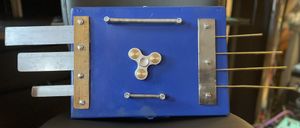
Music has always been a playground for innovation, and at OMR, that spirit thrives. Don Beauchamp’s handcrafted instrument—featured in Elmer Ferrer’s composition Your Letter—introduces a bold new sonic landscape where kinetic energy meets metallic resonance.

Built from a metal frame, the instrument features plates, rods, coils, and a spinning core that create layers of reverberation, shimmer, and whirling harmony. It’s part sculpture, part sound engine, and fully one-of-a-kind.
Ferrer’s performance showcases its full potential—producing textures reminiscent of a prepared piano, a kalimba, and a wind-driven resonance chamber, yet unlike anything heard before. It doesn’t just accompany the music; it redefines it.

Whether this instrument becomes a mainstay or remains a sonic one-off, it represents what makes OMR daring: pushing boundaries, embracing experimentation, and celebrating artists who create their own voice from the ground up.

Read Full Blog →
Studio Stories Blog Graphic

Behind the Beat: Stories from the Studio

In Week 9’s submission “FIESTA EN LA COMARCA”, Elmer Ferrer brings Latin groove to the forefront through the marímbula—a bass-rich instrument rooted in Afro-Caribbean tradition. This wooden box with metal keys produces resonant, earthy tones that anchor the rhythm and harmony of the track.

Blending with Ferrer's intricate guitar work, the marímbula bridges heritage and innovation. Its percussive pulse and melodic depth reinforce the song’s energy while adding a raw, organic presence to the mix.

By spotlighting the marímbula, Ferrer honors the roots of Latin and Caribbean music while expanding its reach into modern storytelling—proof that tradition and creativity can groove together in harmony.

Read Full Blog →
OMR one-stop licensing graphic

Why One-Stop Tracks Save Time and Money

Every track on OMR is one-stop cleared — guaranteed

In the fast-moving world of film, television, advertising, and digital media, music supervisors and producers don’t have the luxury of waiting around for paperwork. Deadlines are tight, budgets are even tighter, and the last thing anyone wants is a licensing roadblock. That’s where one-stop tracks come in — and why they’ve become the gold standard for music placement.

When a track is one-stop, it means all rights are controlled by a single source. No chasing down multiple publishers, co-writers, or record labels. No weeks lost to pending clearance. You get an immediate green light, and production keeps moving.

Every additional rights-holder adds complexity: extra contracts, extra lawyers, extra time. With one-stop tracks, the negotiation is simplified to one agreement. That reduction in back-and-forth directly translates to saved legal fees and less overhead.

There’s also a creative advantage. Nothing derails momentum faster than cutting the perfect track into your edit only to discover the rights can’t be cleared. With one-stop music, supervisors can pitch and place tracks with confidence, knowing there won’t be last-minute surprises. Because the process is streamlined, licensors are often more flexible on price and usage terms, which means productions can secure quality music that fits both the creative vision and the budget.

For artists, granting one-stop rights to a trusted partner like OMR is equally important. Every layer of complexity in a track’s ownership makes it harder for that track to be chosen. Supervisors don’t have the time to negotiate across multiple parties, and they will almost always move on to a song that is faster and simpler to clear. By giving us the authority to represent and license their music as one-stop, artists ensure their work stays competitive and placement-ready.

At OMR Music Production, we take this principle seriously. We will only display songs in our catalog where the artist has granted us full one-stop permission. That means every track you see on our site is pre-cleared, fully controlled, and ready to license at a moment’s notice. One-stop isn’t just a licensing convenience — it’s a production advantage.

Read Full Blog →

The marimbula: a journey from jamaica to fiesta en la comarca

Some images ©

  • Log out